

 PFAS
PFAS in tap water
Forever chemicals have demonstrably been found in parts of the Netherlands (RIVM). Not all filters remove them; read which ones do.
P
Skip to contentIs Dutch tap water safe? Yes, but it contains traces of PFAS, microplastics, and lime per region that are not completely removed by standard water purification. On this page, you will find an honest overview of what our drinking water contains, how water hardness differs per city, and when a water filter makes sense.
Dutch tap water meets all standards set by the Drinking Water Act and the European Drinking Water Directive. Nevertheless, research by RIVM (2024) shows that tap water can contain traces of substances that are not completely removed by standard water purification:
The concentrations of these substances are legally below the permitted standards. Even so, more and more households choose an additional water filter for extra assurance and a better taste.
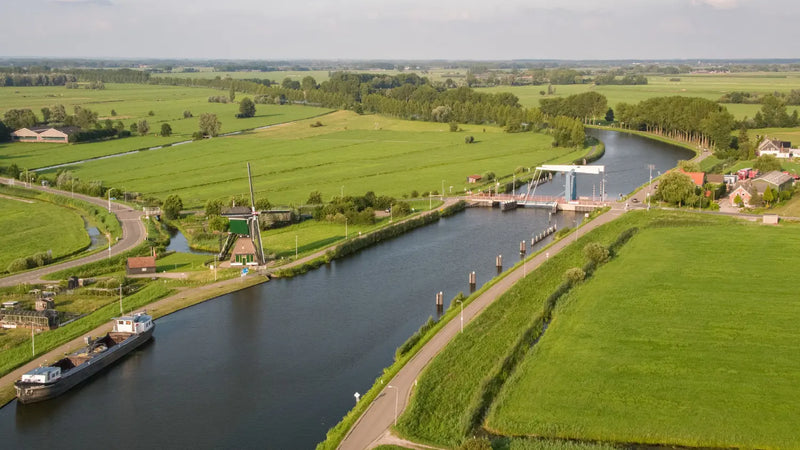
How hard is the tap water in your municipality? Most Dutch cities have soft to moderately hard water (5–10 °dH). Data comes from official drinking water companies: Waternet, Vitens, Brabant Water, WML, Dunea and Evides.
6–9 °dH · low scale
6–9 °dH · slight limescale
5–11 °dH · predominantly soft water
Dutch tap water is safe, but that doesn't mean filtering is pointless. Whether you live in an area with hard water, have an old house, or want extra assurance about PFAS and microplastics: there are concrete reasons to choose filtered tap water.
PFASForever chemicals have demonstrably been found in parts of the Netherlands (RIVM). Not all filters remove them; read which ones do.
 HARD WATER
Water hardness varies greatly by region (4–13 °dH). In some areas, limescale causes deposits on faucets and appliances. A water filter reduces limescale and immediately improves taste. View the water hardness by municipality.
 COMPARE
Can, gravity-fed or under-sink system? We compare filtration, price, and convenience to help you choose the best option for your situation.
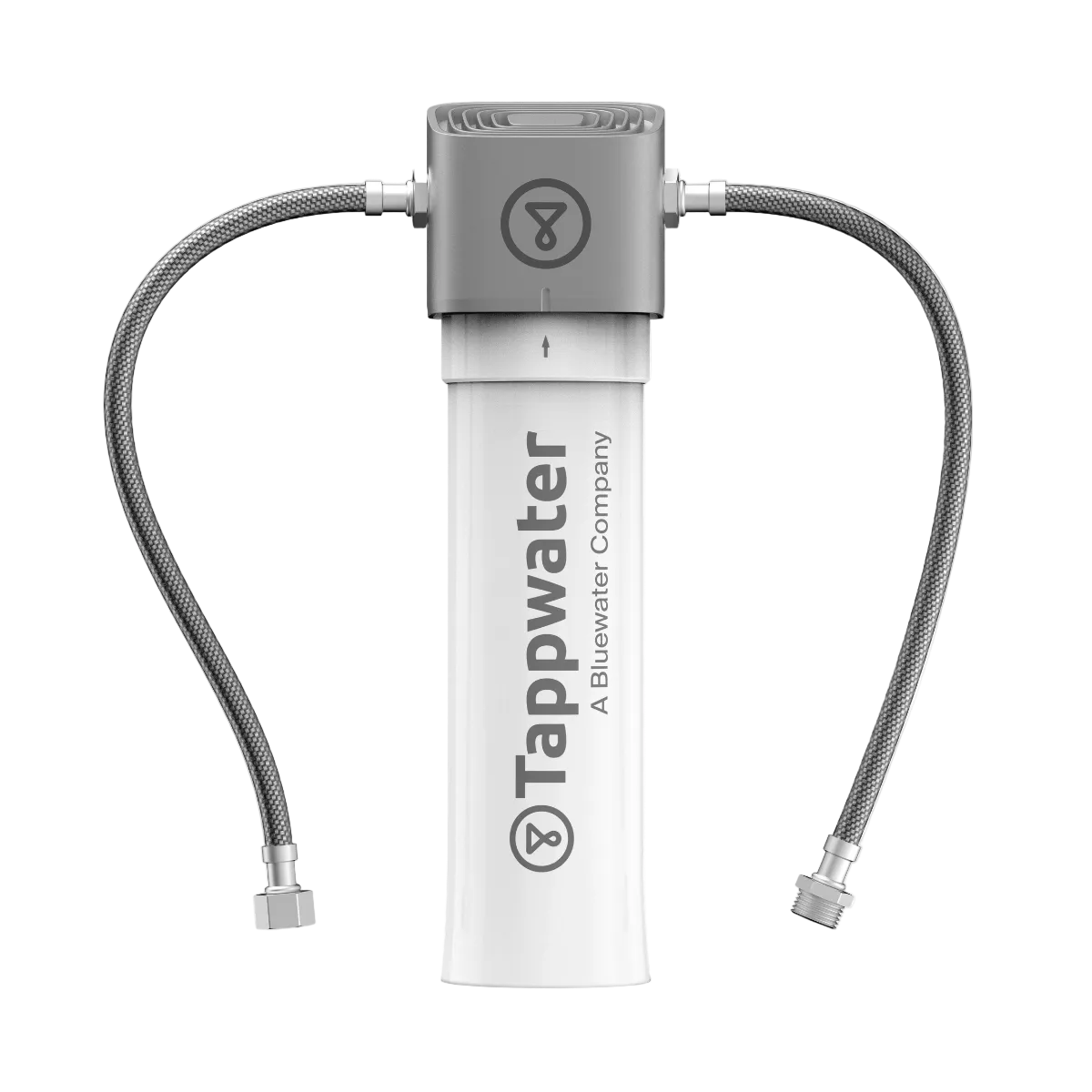
PureFilter Mineral+ is an under-sink system with five filter layers: pre-filter, two carbon fibre layers, Swedish Mineral Rock™ and a post-filter.
All 40 tested chemicals reduced, from 75% to 99.97%. 83% to 85% less PFAS, including PFOA and PFOS. Measured by an independent lab. Lead, mercury, arsenic and cadmium brought below the detection limit. No chlorine taste, no chlorine smell: 99.97% less chlorine. 99% less nitrate and 94% less fluoride.
Swedish Mineral Rock™ adds calcium, magnesium and potassium in the final filter step and gives your water a soft, fresh taste.
What stands out in practice:
For whom: households that value taste, less limescale and filtered drinking water as well as safety.
Official °dH values per municipality based on data from Dutch drinking water companies (Waternet, Vitens, Brabant Water, WML, Dunea, Evides).
| Stad | Regio | Watermaatschappij | Hardheid (°dH) | Categorie | Bron |
|---|---|---|---|---|---|
| Amsterdam | Randstad | Waternet | 7,8 °dH | Zacht | waternet.nl |
| Rotterdam | Randstad | Evides | 5–9 °dH | Zacht | waterhardheid.nl |
| Den Haag | Randstad | Dunea | 5–9 °dH | Zacht | waterhardheid.nl |
| Haarlem | Randstad | PWN | 6–10 °dH | Zacht | waterhardheid.nl |
| Almere | Randstad | Vitens | ca. 4–5 °dH | Zacht | vitens.nl |
| Utrecht | Midden-Nederland | Vitens | 6–8 °dH | Zacht | vitens.nl |
| Arnhem | Midden-Nederland | Vitens | 6,2 °dH | Zacht | vitens.nl |
| Nijmegen | Midden-Nederland | Vitens | 7–9 °dH | Zacht | vitens.nl |
| Enschede | Oost-Nederland | Vitens | 8,5 °dH | Matig | vitens.nl |
| Groningen | Noord-Nederland | Vitens | 7,7 °dH | Zacht | vitens.nl |
| Eindhoven | Brabant | Brabant Water | 5,8–6,4 °dH | Zacht | brabantwater.nl |
| Tilburg | Brabant | Brabant Water | 7,9 °dH | Zacht | brabantwater.nl |
| Breda | Brabant | Brabant Water | 7,8–10,7 °dH | Matig | brabantwater.nl |
| 's-Hertogenbosch | Brabant | Brabant Water | 7,5–10,5 °dH | Matig | brabantwater.nl |
| Maastricht | Limburg | WML | 7,3–7,8 °dH | Zacht | waterhardheid.nl |
Hardheid uitgedrukt in Duitse graden (°dH). Zacht = 0–8,4 °dH · Matig hard = 8,4–14 °dH · Hard = >14 °dH. Bronnen: Waternet, Vitens, Brabant Water, waterhardheid.nl.
Frequently asked questions about tap water in the Netherlands
Yes, Dutch tap water meets all European standards and is continuously monitored by water companies for more than 50 parameters. Traces of PFAS and microplastics are detectable but well below legal limits. Tourists, expats and babies can safely drink tap water in most regions. Source: RIVM drinking water quality.
Water hardness varies by municipality. In the Randstad (Amsterdam, Rotterdam, The Hague), the water is soft: 6–9 °dH. In Utrecht, Arnhem, and Groningen, it's also soft to moderately hard: 6–9 °dH. In Noord-Brabant and Limburg, it's predominantly soft: 5–11 °dH. See the regional breakdown above or consult the official water hardness list per municipality or the website of your water company (Waternet, Vitens, Brabant Water) for exact values.
Yes, Amsterdam tap water is completely safe and is considered one of the best-tasting in Europe. It is soft (7.8 °dH, source: Waternet), low in chlorine, and has a clean, neutral taste. There is no need to buy bottled water in Amsterdam. Waternet sources from Lake IJssel and the dunes and filters extensively.
Yes, RIVM research (2022–2024) has shown that traces of microplastics are detectable in Dutch tap water. The concentrations are below European alert levels, and long-term consequences are still being investigated. Those who wish to avoid microplastics can opt for a water filter that traps particles smaller than 0.5 micrometres.
No, hard water does not pose a health risk. Calcium and magnesium are essential minerals that are good for bones and the heart. This is also confirmed by the WHO Guidelines for Drinking-water Quality. In practice, however, hard water does cause nuisance: limescale on taps, kettles and coffee machines, shorter lifespan of appliances, and a less fresh taste of tea and coffee.
In most regions, Dutch tap water is safe to dilute for babies. In nitrate-rich areas (parts of Brabant and Gelderland), extra caution is advised; see the RIVM guidelines for drinking water quality. Always consult your general practitioner or midwife. For the PureFilter Mineral+, 99% less nitrate and 94% less fluoride was measured.
In most cases, yes. Filtered tap water has a lower ecological footprint (no plastic bottles), is cheaper on an annual basis, and with a good filter, tastes just as fresh or better than bottled water. Moreover, bottled water itself often contains traces of microplastics from the plastic packaging.
In the Netherlands, tap water and drinking water are the same: water that is purified by a water company and supplied to households via the pipeline network. Both terms are used interchangeably. The difference with spring water or mineral water lies in the source and the purification process. More information: Vewin (Drinking Water Companies Association).

 Liever met kaart of PayPal betalen?


